Category Archives: Reading

World of Wonders: Catalpa Tree

Back to Index

In World of Wonders, Aimee Nezhukumatathil describes her early relationship with the catalpa tree as “…shade from persistent sun and shelter from unblinking eyes…”. My early relationship with the catalpa tree is much different. I didn’t worry about too much sun and no one stared at me. I’m white and lived in a white area, Nezhukumatathil is a woman of color (born to a Filipina mother and a father from South India) lived in a white area as a child.

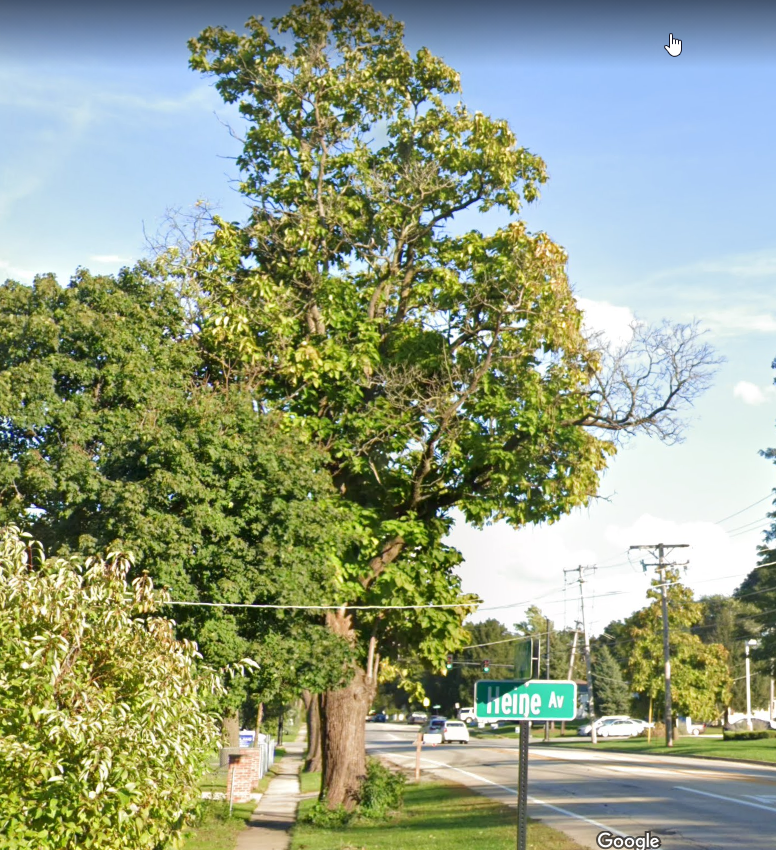
The catalpa tree is probably the first tree I was able to identify and that’s because every house on the block had at least one in their front yard. Ours was to the left of the house, as you looked out a front room window (to the right of the house if you were looking at the house from the street). It was very tall and had a very thick trunk (at least that’s how I remember it). I was pleased, last year, to be able to identify a catalpa for my son’s tree-savvy girlfriend.

Because my childhood street was lined with catalpa trees, I was often tempted to ask the city to rename our street Catalpa Street (instead of the unfortunate Heine Avenue). I never did ask, but I wonder if they’d even consider it. I mean, who wants to live on a street that was a synonym for butt?

Once, when I was maybe 7 or 8, perhaps younger, I noticed baby catalpa trees growing beneath our tree. I was so happy to see the tree had babies that I wanted to help, so I brought a watering can (or maybe it was just a bucket) and watered the babies. As soon as I started pouring water on the babies I became soaked from above. At first I was so terrified that the tree thought I was harming her babies so she treated me to the same event that I and ran away from the tree, but then saw that even out from beneath the branches the water poured down. Then I realized that we’d just experienced a typical late-summer sudden downpour. I never did water the baby catalpas again.

Many years later I realized that the baby catalpas were not actually catalpas, but weeds with similarly shaped leaves. Even later I’ve discovered their name — velvetleaf (Abutilon theophrasti) and whenever I see one I remember (and sometimes tell someone nearby) the story of being watered by a tree.

If you go to Heine Avenue today, you’ll see very few, if any, catalpa trees. Over the years they became victims of storms, and old age. In fact, looking at a 2018 Street View of Heine Avenue, the only remaining catalpa tree is around the corner on Highland.

One storm I vividly recall happened when I was about the same age as the vengeful tree incident. I’d been playing with neighbor kids and suddenly the wind began blowing. The mother at whose house I’d been playing called us all inside and we went to the basement*. When we came out of the basement and the mother walked me home there were at least two catalpas down blocking the street. For years afterwards the neighbors talked about being in “the tail end of a tornado” although, in hindsight, it was probably a derecho**.


*Apparently, and with good cause, my parents were beside themselves with worry. From what I remember, the mother whose basement I was in wouldn’t let me run home — she thought it was that dire. I think that at some point during the storm the host family finally answered their phone (at that time folks only had one phone) and told my parents I was safe. My parents were angry that the host family didn’t call them to tell them I was okay.

**Coincidently the only other derecho I have been in (a few years ago), I was again at a friends house and my worried family (husband and children) had to track me down.
World of Wonders: Explanation

As I mentioned in my last post on When I’m 64, our book group is reading a book by Aimee Nezhukumatathil called World of Wonders: In Praise of Fireflies, Whale Sharks and Other Astonishments and hearing we were reading it was delightful because I’d sat in on a Zoom meeting between Aimee Nezhukumatathil and Ross Gay (the impetus for When I’m 64) and thought I would probably like World of Wonders. I’ve read one essay/chapter and I know I am going to love it. Not only is the writing delightful, but the book is illustrated beautifully by Fumi Mini Nakamura.

Hoover the Talking Seal: An Account of Stroke Rehabilitation from the Patients Point of View

Backstory

I’ve written here and there about my friend Jeremy. I just calculated (for an Amazon review of his book) that we’ve been friends for 47 years. We met when his British grammar school and my high school participated in an exchange. Students from Benton Park Grammar School outside Leeds visited Larkin High School in Elgin, Illinois the spring of 1974 and students (myself included) from Larkin visited Benton Park. I stayed with his family in 1974 and we visited back and forth for several years after that.

I remember my reaction when I found out that Jeremy had a stroke (horrified and deeply sad but relieved he was alive) — but I am not positive how I heard about it. I’m thinking it was Christmastime 1997 and Frances, Jeremy’s wife, sent us a Christmas card with a letter explaining what happened. Thinking back, it seemed to be years after his father’s sudden death (which I remember distinctly because Jeremy’s brother Nick called me), but it was only nine months later. Another trick my mind played on me is that I thought our 2002 visit to England when we stayed with Jeremy and Frances for a few days was much more than five years since the stroke.

Jeremy seemed pretty much his old self during that 2002 visit. We may have spoken about his stroke, but I am not sure. It was mentioned — I know my mom was worried when Jeremy said his vision was not what it used to be. My mom encouraged him to wear glasses even though he said he was too vain.

We’ve kept in contact with Jeremy and Frances on a semi-regular basis (although for years and years they sent us a Christmas card with Jeremy’s fun letter (whimsically drawn and captioned) and we, while delighted, sent nothing back. Once or twice I’d send a letter, but not often enough).

More recently, Jeremy’s daughter and I connected on Facebook and I’d relay news to Jeremy through her. Finally within the past 5 or so years, Jeremy has joined Facebook and that’s how we usually communicate. It was through this connection that I learned that Jeremy had written a book about his stroke. At the time it was only available on Amazon UK, but I bought it anyway. It took a long time to get here (early Covid days), but it eventually arrived. I must have been reading something else or busy languishing or something, because I put it on a shelf and promptly semi-forgot about it. I say “semi” because when I did spy it on the shelf I felt guilty for not reading it.

Hoover the Talking Seal

Cover of Hoover the Talking Seal: An Account of Stroke Rehabilitation from the Patients Point of View (I will remove if asked)

I finally opened Hoover the Talking Seal and began reading it on our recent trip to Lake Gaston where I had no cell or Internet coverage. I really enjoyed reading it and kicked myself for not opening it sooner.

There are many things to like about this book. For me, personally, it’s being able to read Jeremy’s words again. During our early friendship we wrote weekly letters to each other (I have a suitcase full of his letters to me in the attic kneewall). Receiving a letter from him was always a delight. Reading his words in this book was as delightful.

Jeremy is a talented writer. He has been for as long as I have known him. He has a way of writing to the average person so the average person will understand, but he does not “talk down” in his writing. Hoover the Talking Seal tells the story of one man’s stroke and the rehabilitation that followed. It’s told with humor, humility and frankness.

Jeremy’s stroke caused changes in his vision which he writes about in detail. In addition to being a talented writer, Jeremy is also a talented artist. Accompanying the narrative in the book are several illustrations that Jeremy created to show others what he was seeing. He was given some sort of Royal recognition for these illustrations, maybe he mentioned it in the book, but I cannot find exactly where it is.