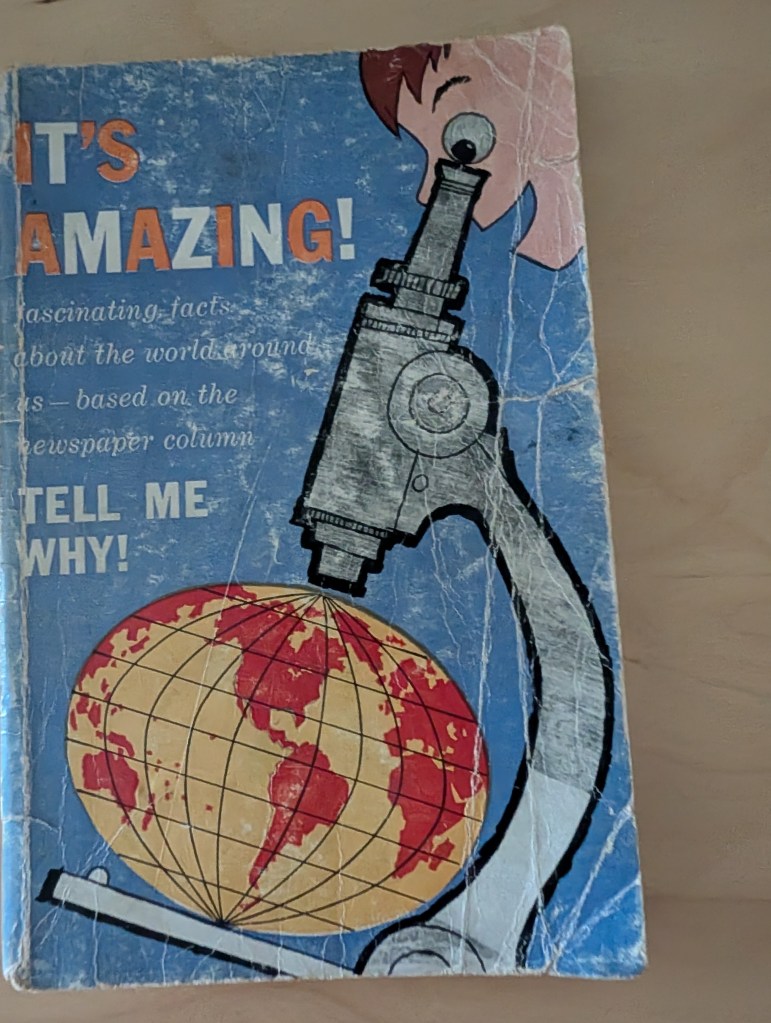
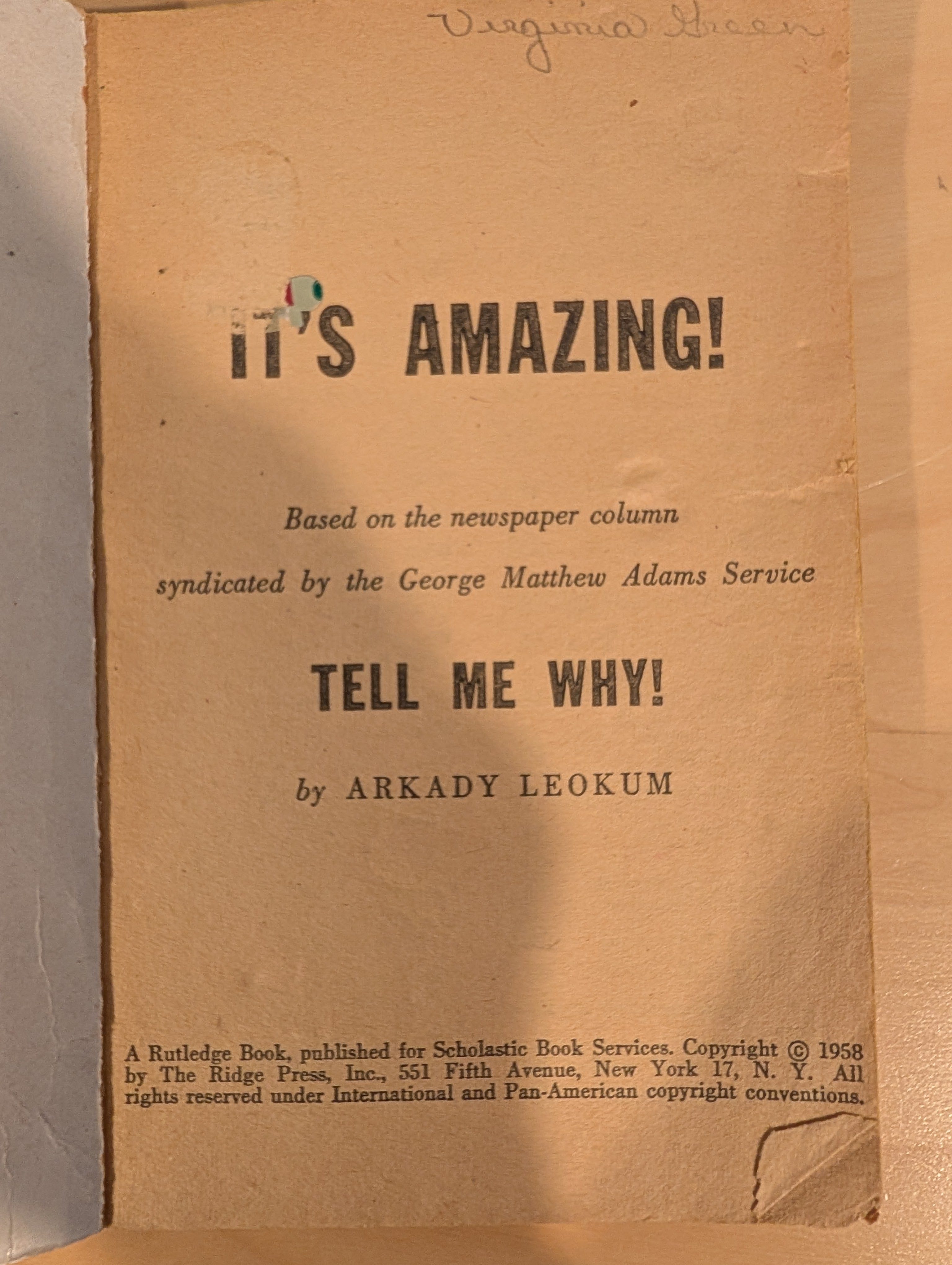
I’ve had this book since I was in grade school. I only just now realized that it belonged to my Aunt Ginny. I thought it was something I picked at a school book sale, or through the Weekly Reader books. No, this book was published in 1958. Aunt Ginny would have been thirteen years old. I am sure I read it cover-to-cover at least once. It’s no wonder I became an insufferable know-it-all as a kid.
The book is part of a series based on an old newspaper column called It’s Amazing (Tell Me Why). There is not much about the column on the Internet.
Knowing that this belonged to Aunt Ginny changes my thoughts about it. I’d planned on donating it, but now I am torn. I want to check it to see what has changed since 1958.
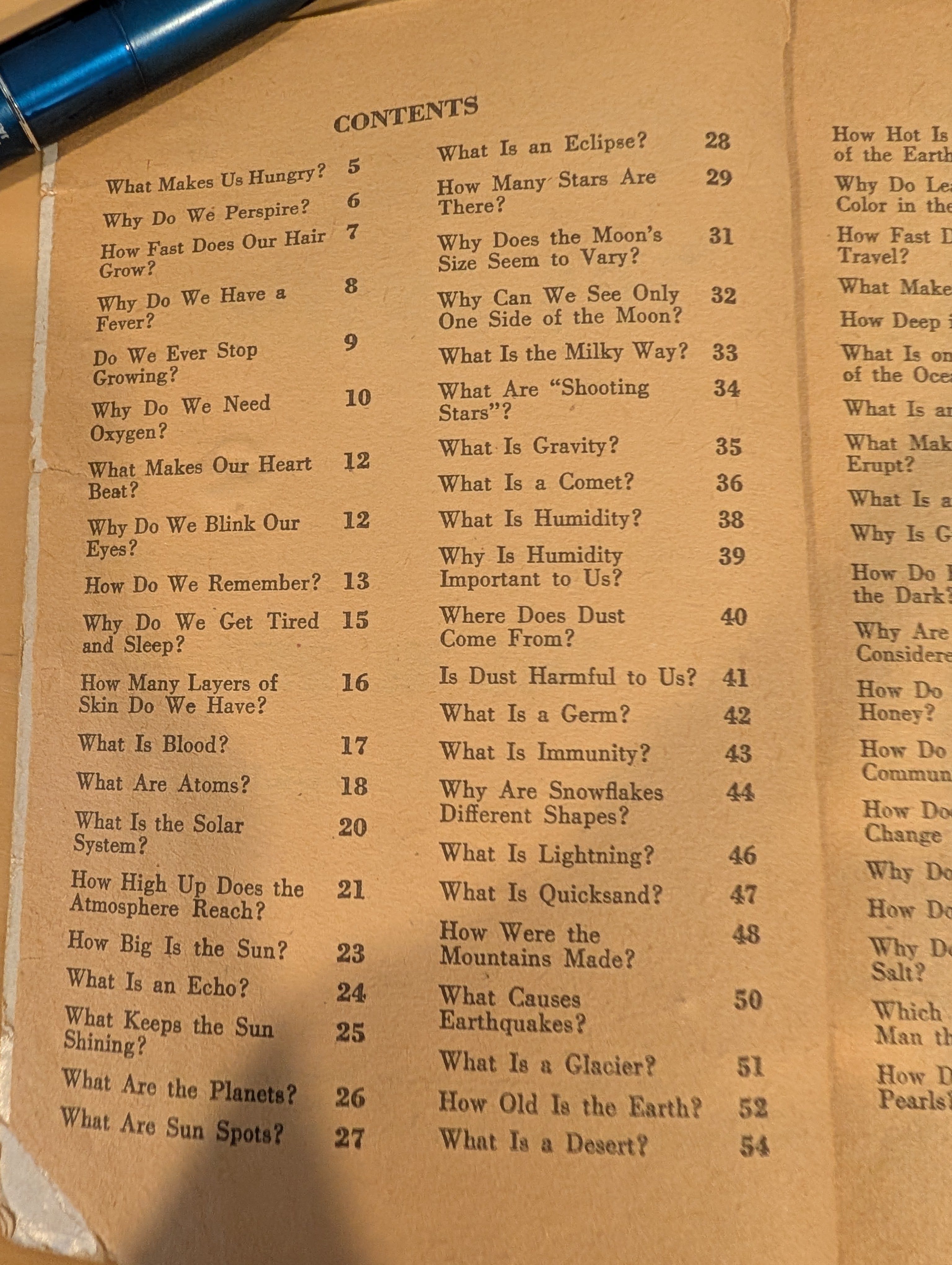
What Makes Us Hungry?
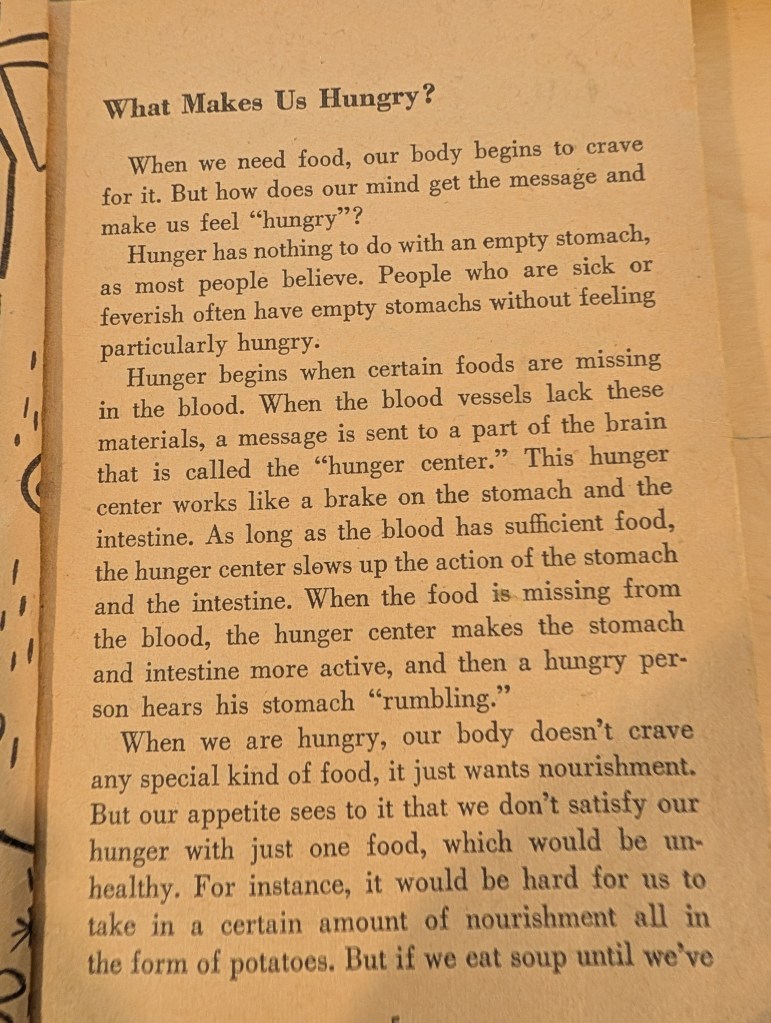
According to ChatGPT, this chapter is a mixed bag:
“Hunger has nothing to do with an empty stomach.”
Modern science: Not true.
An empty stomach absolutely contributes to hunger, although it isn’t the whole story.
As your stomach empties it:
- stretches less
- produces the hormone ghrelin, which signals the brain that it’s time to eat
- generates contractions (“stomach growling” or borborygmi)
However, people can have an empty stomach and not feel hungry (during illness, stress, or after intense exercise), so the authors weren’t completely wrong—they just overstated it.
Better modern version: Hunger is influenced by both an empty stomach and signals from the brain and hormones.
⚠️ “Hunger begins when certain foods are missing in the blood.”
Partly true, but outdated.
Scientists in the 1950s thought the brain mostly detected shortages of nutrients in the blood.
Today we know hunger comes from many signals, including:
- ghrelin from the stomach
- leptin from body fat
- insulin
- blood glucose
- amino acids
- gut hormones (GLP-1, PYY, CCK)
- learned eating habits
- sight and smell of food
- stress and sleep
So blood nutrients are only one piece of the puzzle.
⚠️ “The hunger center works like a brake on the stomach.”
Partly true.
There isn’t a single “hunger center.”
Instead, several areas of the brain—especially the hypothalamus—work together to regulate hunger.
The brain does communicate with the stomach and intestines through nerves (especially the vagus nerve), but it’s much more of a two-way conversation than the book suggests.
✅ “When the stomach becomes more active you hear rumbling.”
This is basically correct.
Stomach growling comes from muscular contractions moving air and liquid through the stomach and intestines. It often happens when you’re hungry because of the migrating motor complex, but it can also happen after you’ve eaten.
❌ “When we are hungry, our body doesn’t crave any special kind of food.”
We now know this isn’t always true.
People can develop cravings because of:
- experience
- emotions
- hormones
- availability
- culture
Whether the body specifically craves nutrients (like salt when sodium is low) is more complicated. Most everyday cravings are not direct signs of nutrient deficiency.
⚠️ “Appetite makes us eat a variety of foods.”
There’s actually some truth here.
Modern nutrition recognizes sensory-specific satiety:
- You get tired of one flavor.
- A different flavor becomes appealing.
- This helps encourage a varied diet.
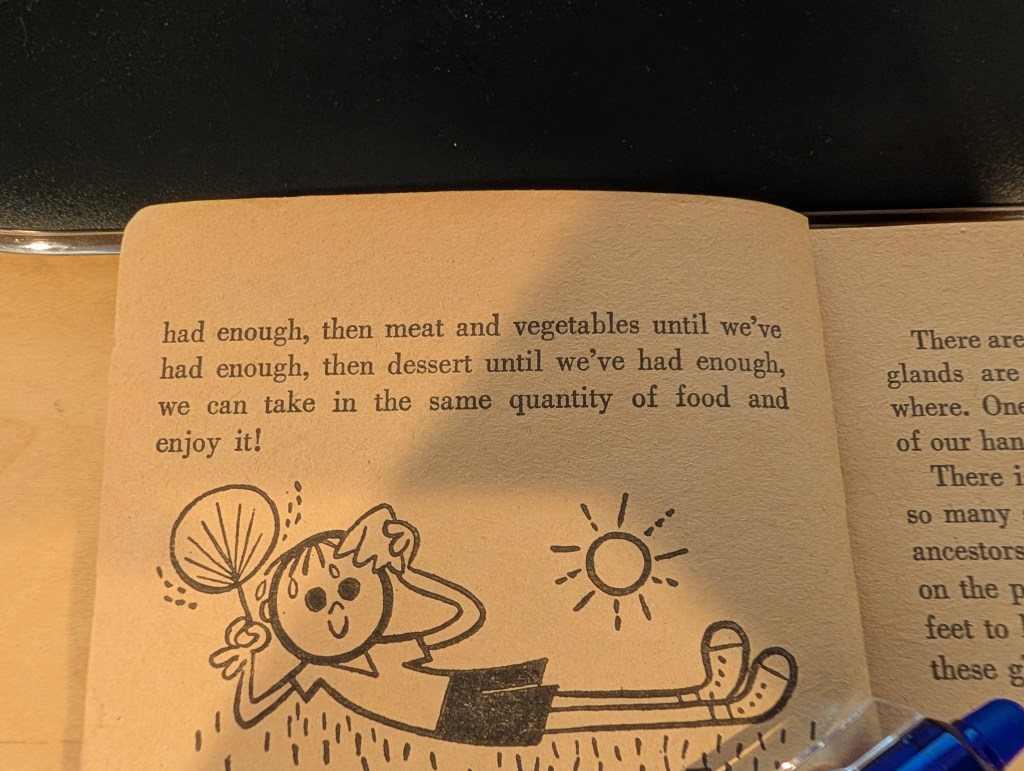
Their potato/soup/meat/dessert example is an early description of this idea, although it’s simplified.
Overall
For a children’s book published in 1958, I’d give it a surprisingly good score.
Statement Today Empty stomach doesn’t matter ❌ Incorrect Blood nutrients influence hunger ⚠️ Partly true Brain regulates hunger ✅ Correct, but oversimplified Stomach rumbling accompanies hunger ✅ Mostly correct Appetite encourages dietary variety ✅ Largely correct I’d say about 60–70% accurate by today’s standards. The biggest change since 1958 is that we’ve learned hunger isn’t controlled by a single “hunger center” responding only to nutrients in the blood. Instead, it’s regulated by a complex network of hormones, nerves, the digestive tract, body fat, metabolism, emotions, habits, and the brain.
I may or may not continue this fact-checking. Stay tuned. Or not…

