As I was placing a very full pitcher of iced tea into the fridge today I remembered the time my mom poured a half gallon of tomato juice all over Bob Mapes’ white suit. The reason I thought about it was because the lid is not securely on the pitcher and I was worried Dean might take it out quickly and spill iced tea all over the place.
So, the story… (I was in the kitchen at the time and observed everything)
This was the 1970s and my parents were having a party. It may have been a daytime party because people were drinking bloody marys. Mom must have been getting ready to make a bloody mary for someone because she was at the fridge and pulled out the large can of tomato juice (back then all juices that were not frozen were in huge cans) with her left hand and tipped it sideways, bending her elbow so the horizontal can was perpendicular to her shoulder, and closed the fridge with her right hand. She was unaware that someone had already used a can opener on the can, so it was open when she tipped it sideways. She was also unaware that Bob Mapes, wearing a stylish-at-the-time white suit was standing very close behind her. I think his intention was to surprise her since he had just arrived. Suddenly Bob jumped back as the contents of the can of tomato juice poured over his white suit.
He was upset. It really wasn’t Mom’s fault — she always tipped these large juice cans sideways — they were never open when she did it, but Bob was furious and as he grabbed his wife, Marge, and stormed out, told Mom he was sending her the dry-cleaning bill.
Bob and Marge were an interesting couple and I’ll write more about them later.
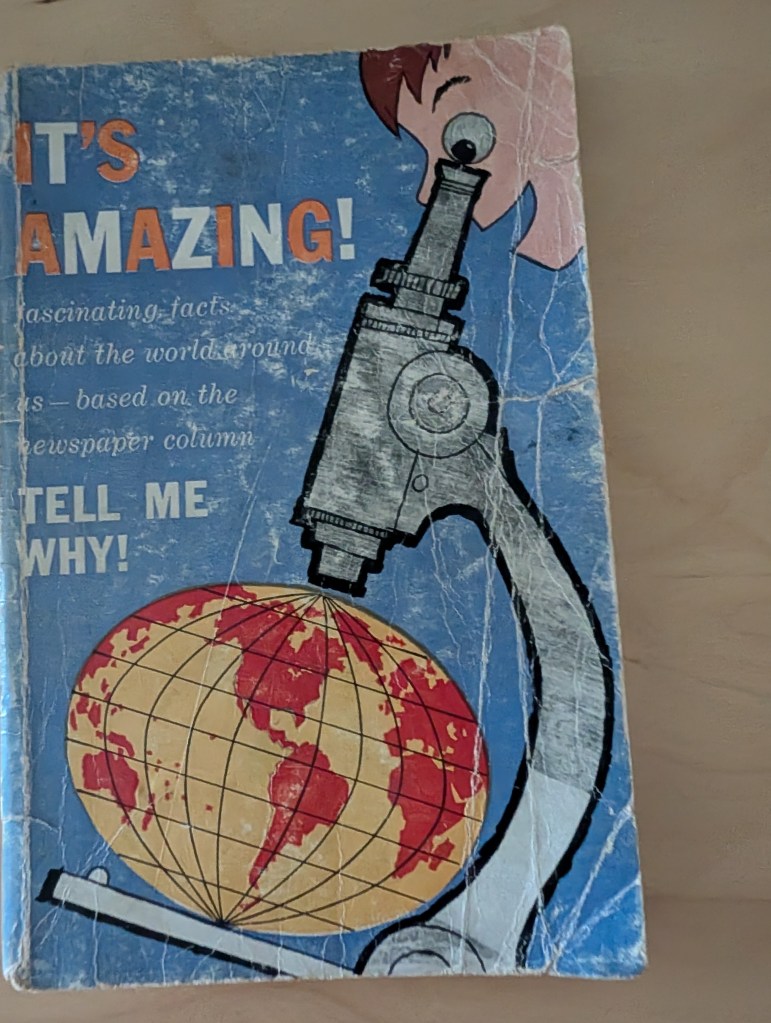
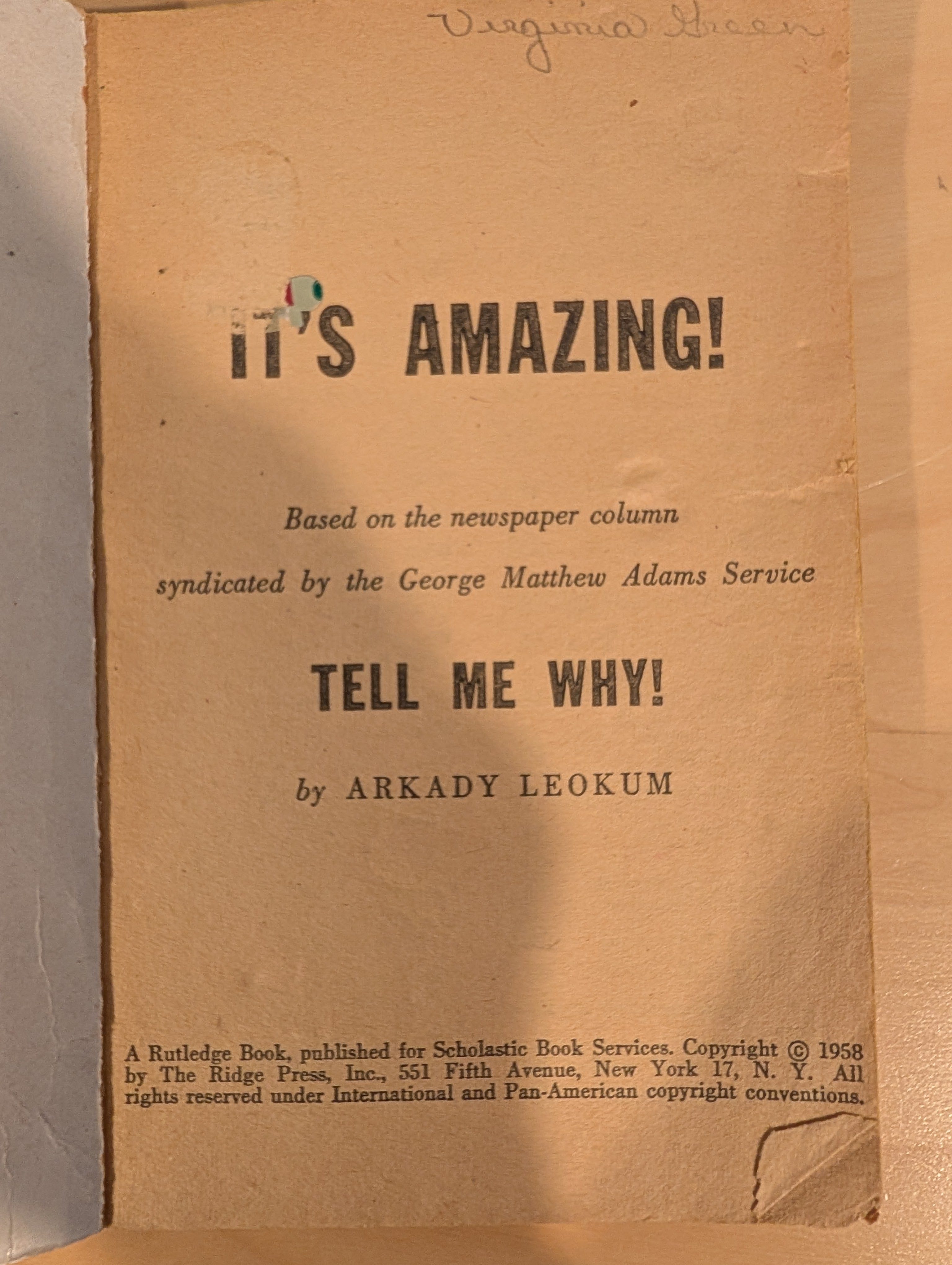
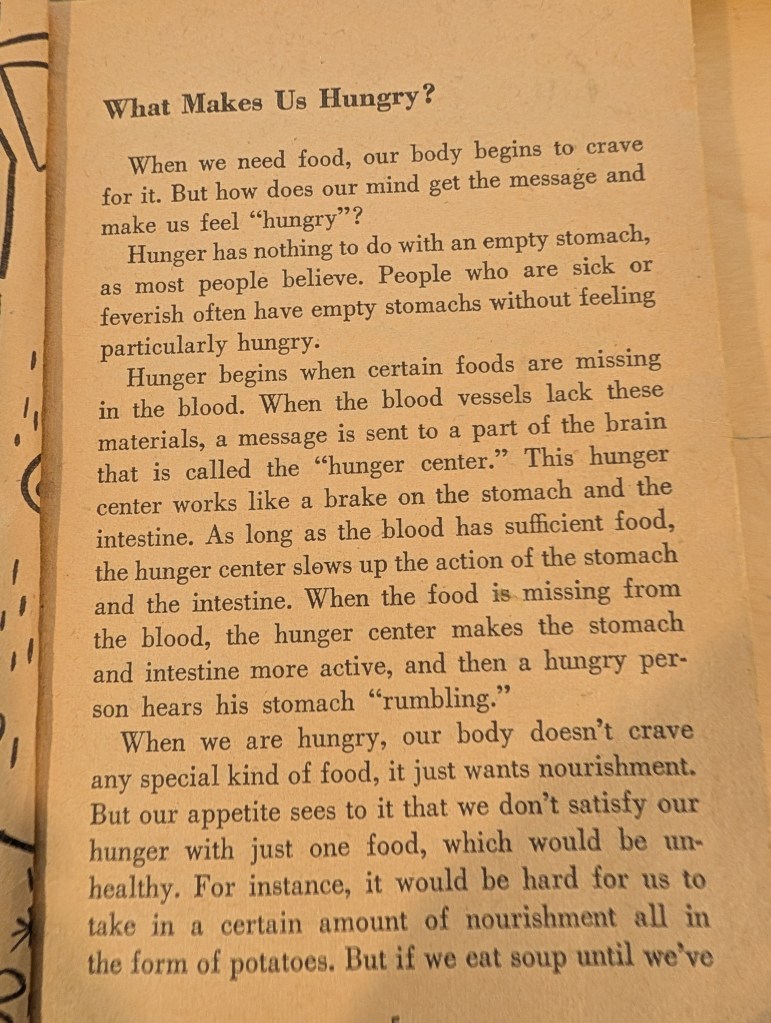
I’ve had this book since I was in grade school. I only just now realized that it belonged to my Aunt Ginny. I thought it was something I picked at a school book sale, or through the Weekly Reader books. No, this book was published in 1958. Aunt Ginny would have been thirteen years old. I am sure I read it cover-to-cover at least once. It’s no wonder I became an insufferable know-it-all as a kid.
The book is part of a series based on an old newspaper column called It’s Amazing (Tell Me Why). There is not much about the column on the Internet.
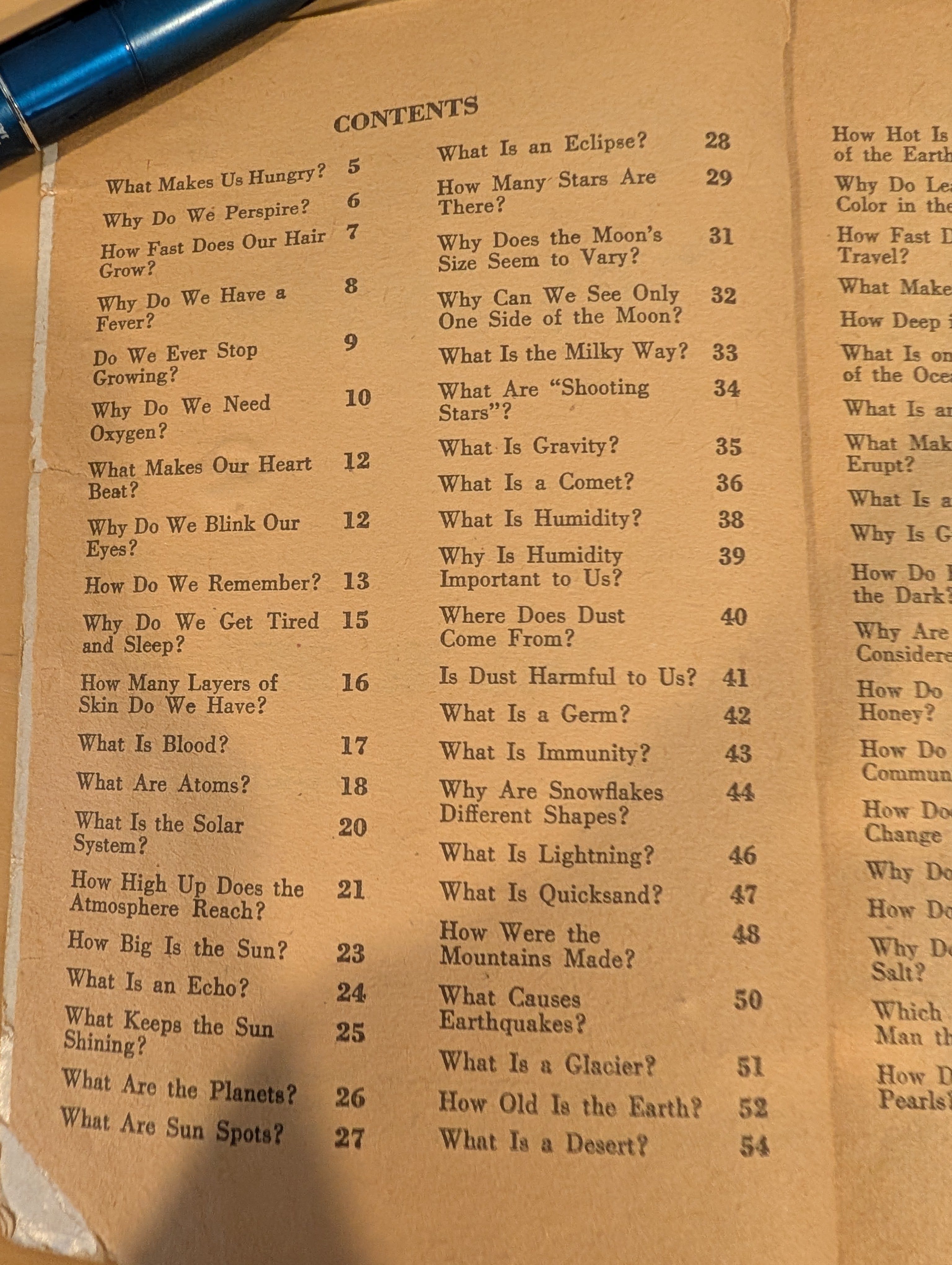
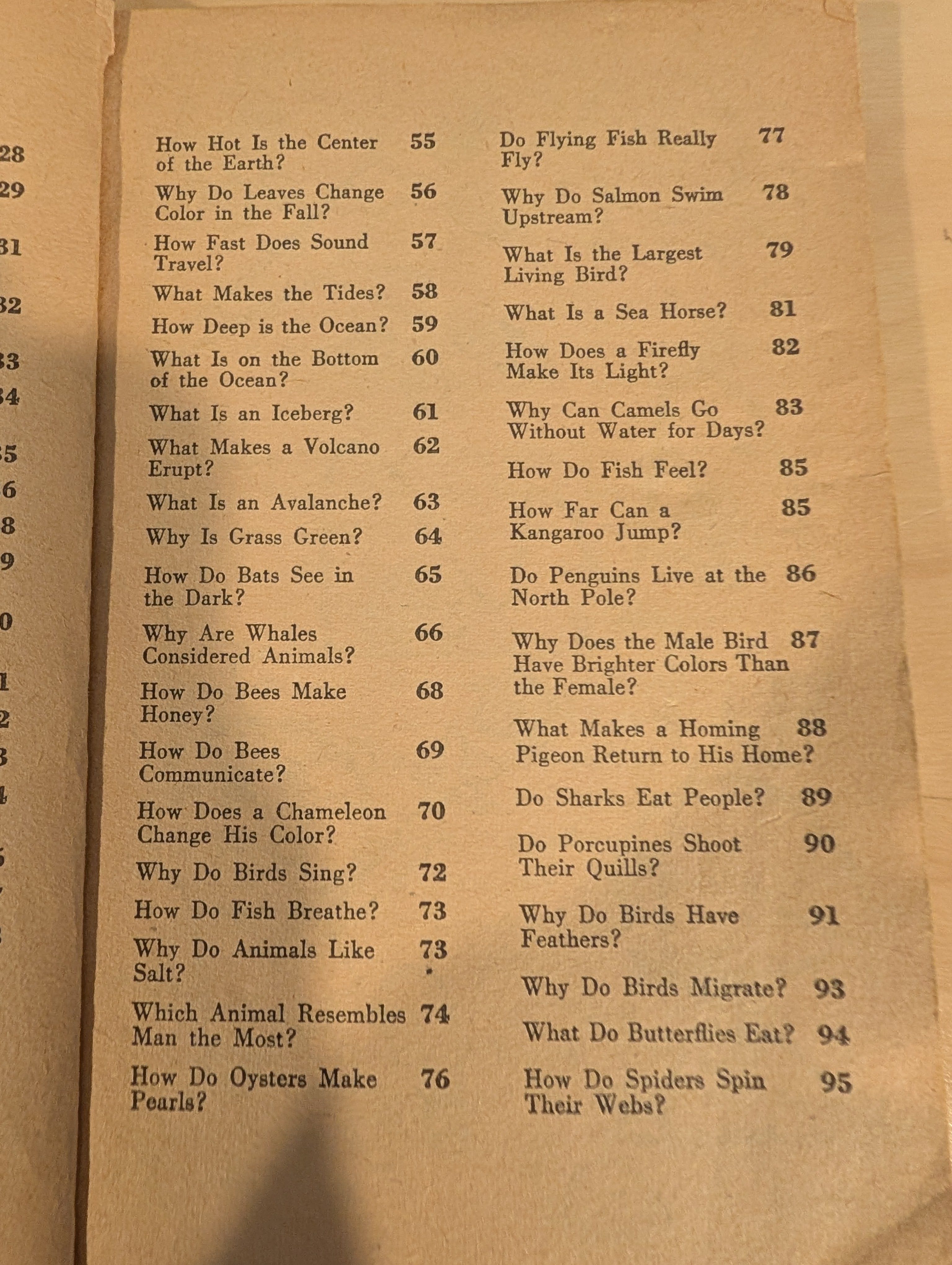
Knowing that this belonged to Aunt Ginny changes my thoughts about it. I’d planned on donating it, but now I am torn. I want to check it to see what has changed since 1958.
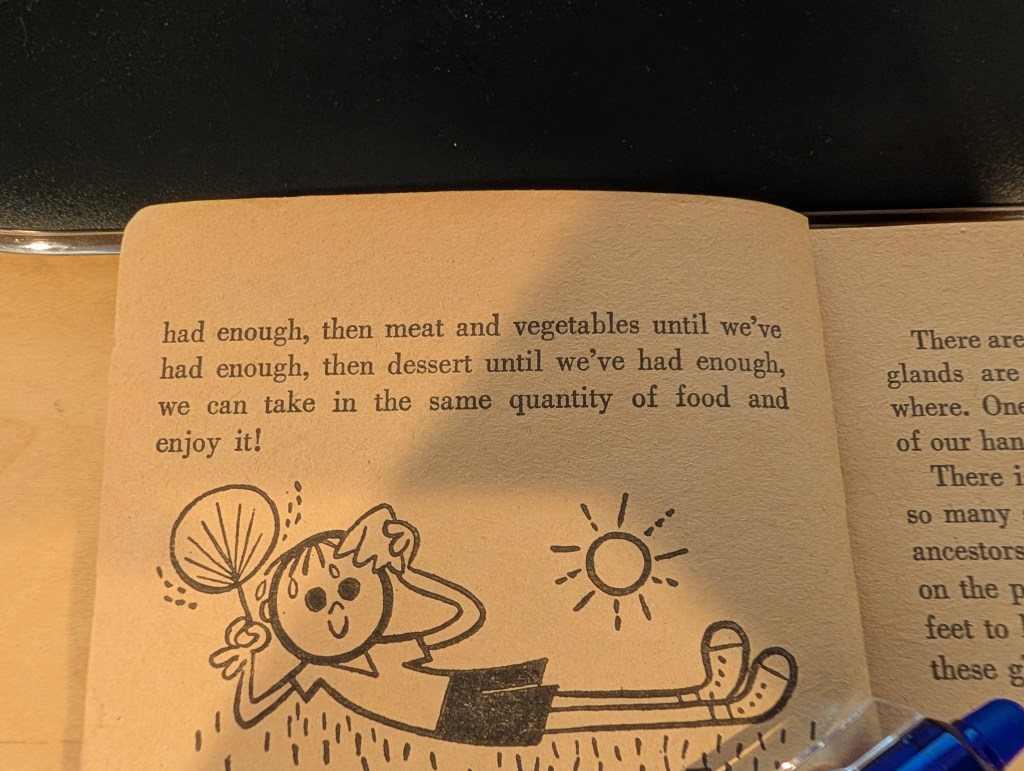
What Makes Us Hungry?
According to ChatGPT, this chapter is a mixed bag:
“Hunger has nothing to do with an empty stomach.”
Modern science: Not true.
An empty stomach absolutely contributes to hunger, although it isn’t the whole story.
As your stomach empties it:
stretches less
produces the hormone ghrelin, which signals the brain that it’s time to eat
generates contractions (“stomach growling” or borborygmi)
However, people can have an empty stomach and not feel hungry (during illness, stress, or after intense exercise), so the authors weren’t completely wrong—they just overstated it.
Better modern version: Hunger is influenced by both an empty stomach and signals from the brain and hormones.
⚠️ “Hunger begins when certain foods are missing in the blood.”
Partly true, but outdated.
Scientists in the 1950s thought the brain mostly detected shortages of nutrients in the blood.
Today we know hunger comes from many signals, including:
ghrelin from the stomach
leptin from body fat
insulin
blood glucose
amino acids
gut hormones (GLP-1, PYY, CCK)
learned eating habits
sight and smell of food
stress and sleep
So blood nutrients are only one piece of the puzzle.
⚠️ “The hunger center works like a brake on the stomach.”
Partly true.
There isn’t a single “hunger center.”
Instead, several areas of the brain—especially the hypothalamus—work together to regulate hunger.
The brain does communicate with the stomach and intestines through nerves (especially the vagus nerve), but it’s much more of a two-way conversation than the book suggests.
✅ “When the stomach becomes more active you hear rumbling.”
This is basically correct.
Stomach growling comes from muscular contractions moving air and liquid through the stomach and intestines. It often happens when you’re hungry because of the migrating motor complex, but it can also happen after you’ve eaten.
❌ “When we are hungry, our body doesn’t crave any special kind of food.”
We now know this isn’t always true.
People can develop cravings because of:
experience
emotions
hormones
availability
culture
Whether the body specifically craves nutrients (like salt when sodium is low) is more complicated. Most everyday cravings are not direct signs of nutrient deficiency.
⚠️ “Appetite makes us eat a variety of foods.”
There’s actually some truth here.
Modern nutrition recognizes sensory-specific satiety:
You get tired of one flavor.
A different flavor becomes appealing.
This helps encourage a varied diet.
Their potato/soup/meat/dessert example is an early description of this idea, although it’s simplified.
Overall
For a children’s book published in 1958, I’d give it a surprisingly good score.
Statement
Today
Empty stomach doesn’t matter
❌ Incorrect
Blood nutrients influence hunger
⚠️ Partly true
Brain regulates hunger
✅ Correct, but oversimplified
Stomach rumbling accompanies hunger
✅ Mostly correct
Appetite encourages dietary variety
✅ Largely correct
I’d say about 60–70% accurate by today’s standards. The biggest change since 1958 is that we’ve learned hunger isn’t controlled by a single “hunger center” responding only to nutrients in the blood. Instead, it’s regulated by a complex network of hormones, nerves, the digestive tract, body fat, metabolism, emotions, habits, and the brain.
I may or may not continue this fact-checking. Stay tuned. Or not…
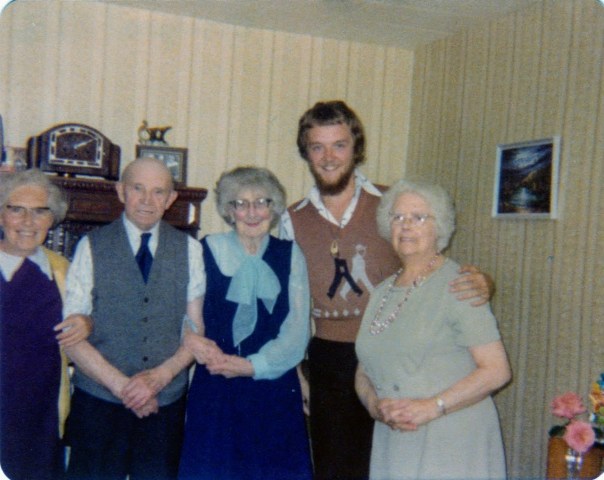
Back when I was going to England, I met Jeremy’s Auntie Nell. If I recall correctly, she was his maternal grandmother’s sister. Both she and her sister ( I only knew her as Grandma White) were midwives in their youth. Hmm, maybe I should finish watching, Call the Midwife on PBS — I’d not really connected the two. I think they both, or only one of them received an honor from the Queen for their accomplishments.
Auntie Nell is on the left in this photo. Her sister is on the far right.
Auntie Nell, Granddad White, Auntie Ella, Jeremy, Grandma White
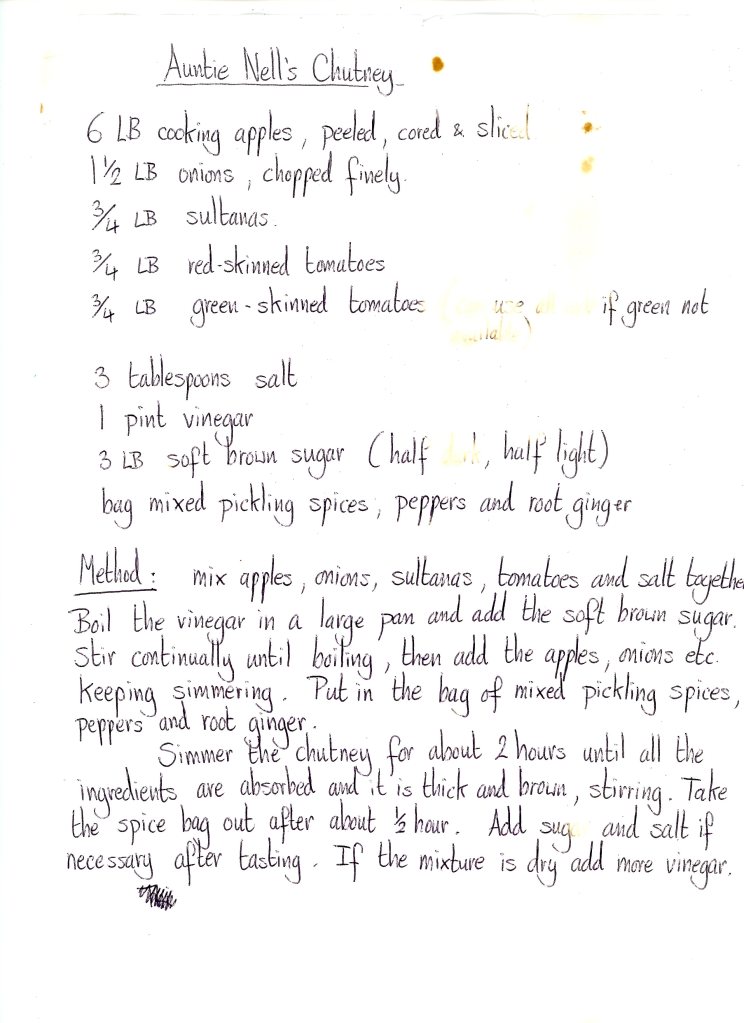
Anyway, I must have really liked chutney in England and Jeremy carefully wrote out his Auntie Nell’s Chutney recipe. Or perhaps they served me Branston Pickle and it was not something one could easily find in the US. Sad to say I have not yet made it.
Auntie Nell’s Chutney
6 lb cooking apples, peeled, cored and sliced
1.5 lb onions, chopped finely
.75 lb sultanas (raisins)
.75 lb red-skinned potatoes
.75 lb green-skinned tomatoes (can use all red if green not available
3 tablespoons salt
1 pint vinegar
3 lb soft brown sugar (half light, half dark)
bag mixed pickling spices, peppers, and root ginger
Mix apples, onions, sultanas, tomatoes, and salt together. Boil the vinegar in a large pan and add the soft brown sugar. Stir continually until boiling, then add the apples, onions, etc. keeping simmering. Put in the bag of mixed pickling spices, peppers, and root ginger.
Simmer the chutney for about 2 hours until all the ingredients are absorbed and it is thick and brown, stirring. Take the spice bag out after about half an hour. Add more sugar and salt if necessary after tasting. If the mixture is dry, add more vinegar
Hmm, I am going to have to consult Jeremy about some of this. I don’t understand what the peppers are — black peppercorns?
Stay tuned, I will make this and report back. Perhaps when we have green tomatoes on our plants.