Category Archives: Birds

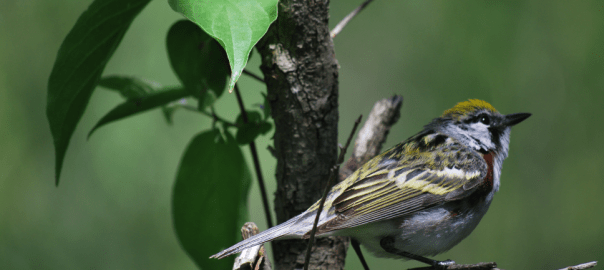
Chestnut Sided Warbler

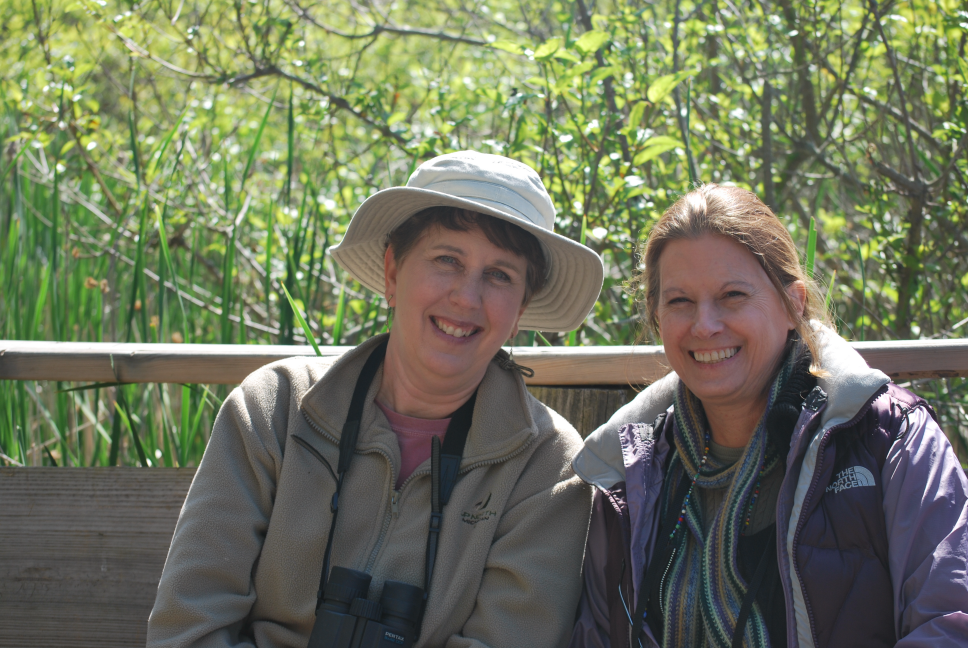
Birder Watching at Magee Marsh

A year or two ago I saw a tweet by a fellow twitter birder / accessibility advocate about her trip to Magee Marsh in Ohio.  I kept it in the back of my head because we drive right by it when we travel to and from Illinois.

Then a few months ago I read The Big Year: A Tale of Man, Nature, and Fowl Obsession by Mark Obmascik (on IB’s recommendation) and later saw the film based on the book.  I was interested in the characters,  especially the Maryland-based birder, Greg Miller — the one who worked at the nuclear power plant (played by Jack Black in the movie).  I googled his name and found out he moved back to Ohio and was active in Ohio birding.  His blog talked about the “Biggest Week in American Birding” festival which was planned for May — around the time the warblers were due to fly back to Canada.

Warbler season,  if not The Biggest Week,  corresponded with our trip to Oberlin to pick up Andrew,  about an hour from Magee Marsh.  I hoped to visit Magee and perhaps add a few warblers to my life list. Then Dean decided we should visit Illinois before the kids got out of school. This week did correspond with the Biggest Week and as we’d be stopping in Oberlin for the night to visit Andrew I planned on heading to Magee Marsh on our way to Illinois.

I mentioned this to the aforementioned birder/accessibility advocate and she made plans to meet me at Magee.

I didn’t really know what to expect, but knew that I’d be seeing a lot of birders. One of the funniest parts of The Big Year was seeing a bunch of people stare through binoculars at something in a tree. I wondered if I’d see something similar at Magee Marsh. I also knew that many of the birding folks I follow on Twitter were planning on being at Magee Marsh that week. Seeing some of the tweets got me really in the mood to go birding — something I’d not really done in years, except passively. I also knew that someone I’d hoped to meet someday, Sharon Stiteler aka Birdchick, would be around.

I did see a lot of birds, some new to me, some not. I only could identify a few. If  you’ve never been birding, one thing you need to be able to do is explain where a sighting is. I failed miserably. I saw something and mistakenly announced it loud enough for other birders in the general vicinity to hear me. I then tried to describe where it was and what it looked like. No one was able to follow my directions and there was an audible annoyed sigh when I said, “It’s gone.” (I saw it later and was embarrassed to find out it was a Baltimore Oriole. I know what they look like when I see the top of one, but this was from below. The orange of its breast was muted and looked yellow to me. I thought it was some sort of flycatcher.)

The birds were fun to see, some so close I didn’t need binoculars, but my favorite part was the birders. There were birders of all ages. I was surprised to see a large number of Amish birders, but it stands to reason — there are a lot of Amish in that part of Ohio.

I did see “Birdchick” but was too shy to say hello. I was not quite sure it was her, but when I saw tweets she sent prior to me seeing her proved she was just in front of me at the time. Next time I’ll make sure to say hello.

I really enjoyed meeting Deborah. We’ve been twitter buddies for years and have even spoken on the phone. She’s a lot more gregarious than I and she was not afraid to ask folks what they were looking at and ask for advice on what she was looking at.

This has rekindled a desire to get out and bird more often. I might even go on bird walks with other birders. In the past I wouldn’t add a bird to my life list if I didn’t ID it myself. I figure if real birders help each other ID birds, I can too. Now I need to get my verbal birding skills in order.

Here’s Deborah’s list of what we saw:

  • Wilson’s Warbler
  • Magnolia Warbler
  • Baltimore Oriole
  • Purple Martin
  • Blackburnian Warbler
  • Yellow Warbler
  • Great Horned Owls babies on tree limbs
  • Sandhill Crane
  • Great Egret
  • American Redstart
  • Northern Parula
  • Red-winged Blackbird
  • Black and White Warbler
  • Gray Catbird
  • American Robin
  • Canada Geese
  • Double-crested Cormorant
  • Blue-gray Gnatcatcher
  • Ruby-crowned Kinglet
  • Nashville Warbler
  • Chestnut-sided Warbler

The Scent of a Book

Before last May, more than one person was surprised to hear that I didn’t own a Kindle or any other kind of e-reader. They knew about my love of gadgets and couldn’t imagine why I’d not bought an e-reader yet. My response was the same to all — as much as I loved technology, I liked the smell of a book better.

Everyone who owned an e-reader tried to get me on-board by telling me how light they were. How I’d be able to hold hundreds of books on it. How easy on the eye they were. I heard so many good things about e-readers that I finally researched them and ended up asking for, and receiving, a Nook Color for Mother’s Day last year. I chose the Nook Color because I’d heard it could be turned into a cheap Android tablet — in case I didn’t like the e-book aspect.

Now, a few months shy of a year later, I give you my opinion: I like the smell of a book.

I also like the feel of a book in my hands and I like the sound of the pages being turned. The other day I considered cataloging all of the books in my house with an app I downloaded on my phone. I was excited at the prospect to touch (and smell) each of my books again and either remember the time spent reading them or relish the anticipation I felt about reading them someday. Then I thought about the books I downloaded on my Nook (and the audio books on my mp3 player). I would never hold those books or smell them or hear their pages turning. Did I really read them? Do I really own them? Can I catalog them?

I recalled the library scene from the 1960’s version of The Time Machine. The Time Traveler pulls a book off a shelf only to have it crumble to dust in his hand. Later he is shown the Talking Rings. Are my e- and audio- books like the talking rings or are they nothing but binary dust motes?

I have read a few books on my Nook Color. My favorite was Stephen King’s 11/22/63, but because I loved it so, I ended up with eye-strain headaches from reading it deep into the night. It was convenient to buy the book the day it came out — but it was a whim buy. I probably would have waited and asked for it for Christmas if I didn’t have the Nook.

Autograph of Roger Tory Peterson

Right now I am reading The Big Year on the Nook. (actually I am reading it on my Android phone because my husband is reading the Stephen King book on the Nook). Yesterday in The Big Year I read about Roger Tory Peterson’s account of his Big Year: Wild America and remembered finding a copy of that book in an antique store about 20 years ago. I was a novice birder but recognized one of the authors. Opening the book to check the price ($2.50) I also glanced at the title page and was astounded to see that Peterson had inscribed it with best wishes to a Lloyd Foster. Of course I bought the book. It smells delightful.

This creates another issue — how do authors autograph e-books?

Ms P. and the Rats of NIH(M)

I’m a birder. A lazy birder, but a birder nonetheless. It is part of who I am and has  been for more than half of my life.

One huge aspect of birding for me is feeding the birds. I have many bird feeders — two Droll Yankee tube-like feeders: one serves up tiny nyger seed that the finches love and one doles out larger seed such as sunflower, cracked corn or safflower. I also have decorative bird feeders — one looks like a birch log, but is ceramic. Another looks like a church, with a roof and clear plastic sides which hold in the seed — which I am surprised has not been chewed apart by squirrels yet. Then there are the suet cages and nyger seed socks.

I don’t have all of these feeders up at the same time. That would be unwise in Bethesda. I’d be the crazy bird lady. Recently I had one Droll Yankee feeder filled with sunflower seed and one nyger sock in back by the bird bath and one nyger sock outside the attic window.

One day I noticed that the nyger sock in the backyard had a huge hole in it. I wondered what animal had made this hole. I suspected it was a squirrel, but knowing that squirrels don’t particularly care for nyger seed, I was more than a little worried we had another rodent problem.

A few days later I looked out the window and saw the culprit. A large brown Norway rat. It was just after dinner and this rat was helping him or herself to the nyger seed. It was actually kind of cute — if you forget all the bad rat stories. But I was dismayed. I thought we were done with these things.

Years ago we had rats in the ductwork of our addition. Dean and I both noticed a funky smell coming from the heating vents in the sun room — it reminded me of the elephant house. When we discovered that it was a nest of rats, I was horrified and would never ever have admitted our discovery to anyone. I was embarrassed and ashamed and it lowered my self-esteem for a while. Dean, being the son of a dairy farmer, took care of it and we hoped we were done with rats.

The following January, however, we came home from our annual Christmas in the Midwest trip to find a rat had gotten into our house and was trapped in a mousetrap behind our stove. Dean took care of it, too. I was ready to hire an exterminator, but Dean felt that he knew what to do as well as any exterminator, so I believed him.

The next year was the year of cicadas in our area and when the cicadas died out the entire neighborhood had a rat problem. It seemed that the rats were displaced from NIH because of construction there. They didn’t care where they lived because they had a bounty of cicadas for several weeks, but after the cicadas were done with their (very cool) life cycle in our area, the rats had nothing to eat, so became a nuisance. I finally lost the embarrassment I was feeling about the rat problem we’d had — especially since other neighbors were admitting to having had rats in previous years as well.

Everyone dealt with the rats in their own ways, some hired exterminators while others, like Dean, took care of it themselves. The worst part of the rat problem for me, however, was having to give up feeding the birds. I had a slight meltdown when I realized I’d have to do this, but Dean said that maybe it would not be permanent. I held on to that hope.

We went a few years with no apparent rat problems — I even was able to feed the birds again until this year when I saw the rat eating the nyger seed.

So now I’ve had to store my bird feeders for good. I don’t know if I’ll ever be able to feed birds in the backyard again — certainly not at this house. I think I can still feed them at the attic windows — but it’s not really the same. I’ll not be seeing any more Rose Breasted Grosbeaks feeding on sunflower seed outside the window in the back yard.  I can still provide water for the birds and I have started looking more at planting more bird friendly plants in the yard. But I feel as if a part of my personality has been lost for good.